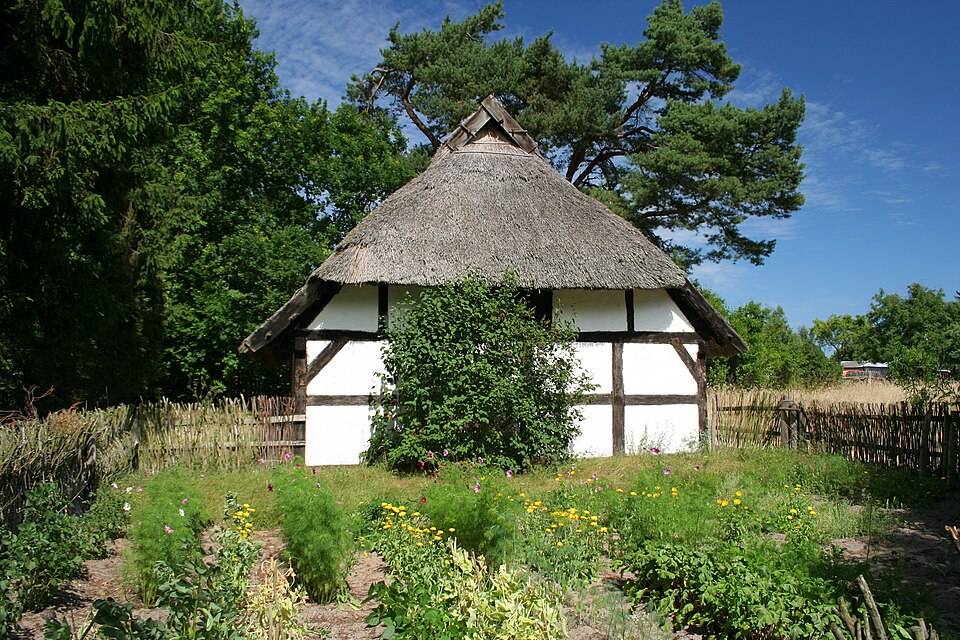
An open-air museum inside a working village on Lake Łebsko - twenty Slovincian timber-frame cottages record the life of a Pomeranian people who no longer exist. Among the exhibits: klumpy, wooden shoes for horses so they wouldn't sink into the peat.
The open-air museum in Kluki is open from Tuesday to Sunday: until 18:00 in June, July and August, and until 16:00 in the remaining months. Tickets cost 24 zł, or 18 zł reduced, and on Mondays entry is free, although visiting is then limited to a single farmstead. From December to the end of January the museum is closed, and from Rowy it is about 25 minutes by car.
Opening hours and tickets
The museum is open from Tuesday to Sunday. In June, July and August you can visit until 18:00, and in the remaining months until 16:00. From December to the end of January the museum is closed. A standard ticket costs 24 zł and a reduced ticket 18 zł. On Mondays entry is free, but only one farmstead is open then, so for a full visit it is better to pick another day.
Getting to Kluki from Rowy
From Rowy to Kluki is about 25 minutes by car. The village lies on Lake Łebsko.
What you will see at the museum
More than twenty original half-timbered cottages and farm buildings stand on ten hectares. The permanent exhibitions show interiors from the turn of the 19th and 20th centuries, and the oldest cottage dates from the end of the 18th century and has kept a rare chimney-kitchen fire system. In the display cases you will see klumpy (wooden clogs) and wooden shoes for horses that let the animals walk on peat bogs and waterlogged meadows.
Draught horses, sheep, a goat and poultry live in the farmsteads, so for children the museum is as much a meeting with animals as a history lesson.
Who were the Slovincians
The museum documents the life of the Slovincians, a small Kashubian-Pomeranian group. Their language and identity died out in the middle of the 20th century, after the post-war expulsions. At the same time, Kluki is still a living village: fewer than a hundred people live here, there is a church, a shop and bread ovens, and the museum occupies its oldest part.
Czarne Wesele and the end of the season
The season opens with Czarne Wesele, the Black Wedding, a staged Slovincian wedding held from 1 to 3 May. It closes with Pożegnanie lata, the Farewell to Summer, on the third Sunday of September.
The museum with children and with a dog
The animals in the farmsteads and the open space mean children usually walk around here happily. Dogs are allowed only on a lead and wearing a muzzle, and they cannot go inside the cottages; guide dogs are the exception.


